
Zander Schweisstechnik. Ειδικά ηλεκτρόδια.
Η Αγγελάτος Γ. &
Σια Ο.Ε. εισάγει και σας προμηθεύει με τα
κορυφαία στο χώρο προϊόντα συγκόλλησης της Γερμανικής Zander Schweisstechnik.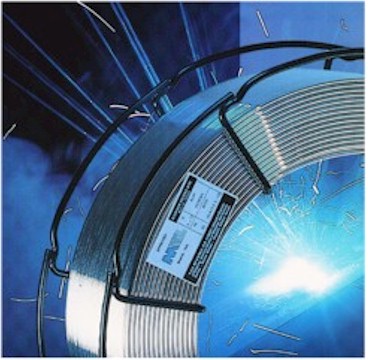
Για
περισσότερα από
είκοσι χρόνια, η διοίκηση της εταιρείας Klaus Zander Schweiss-und
Schleiftechnik έχει σταθεί με επιτυχία στον τομέα της μηχανικής των
συγκολλήσεων. Η προσπάθεια αυτή υποστηρίζεται από τους υπαλλήλους οι
οποίοι έχουν αποκτήσει τις τεχνολογικές τους ικανότητες μετά από πολλά
χρόνια
εργασίας με γνωστούς γερμανούς κατασκευαστές και διανομείς των
αναλώσιμων συγκόλλησης, καθώς και μέσα από την έρευνα
τεχνολογικών ινστιτούτων. Τη γνώση τους αυτή μεταφέρουν τώρα
στην εταιρεία μας, προς όφελος
των πελατών μας.
ΠΡΟΪΌΝΤΑ Zander Schweisstechnik.
CSS:ΜΕΤΑΒΕΙΤΕ ΑΠ'ΕΥΘΕΙΑΣ ΣΤΟ ΠΡΟΙΟΝ
ΚΑΝΟΝΤΑΣ ΚΛΙΚ ΣΤΟ ΟΝΟΜΑ ΤΟΥ ΑΚΡΙΒΩΣ ΑΠΟ ΚΑΤΩ
| Covered Stick Electrodes
/ Solid
Wires and TIG Welding Rods as well as Special Autogenous Welding Rods / Flux-Cored Welding Wires / Filler Metals and Grinding Materials for Tracks / Information on Usuable Wire Flux Combinations / Zander - Solders / PTA Powders for Hardfacing. |
|||
| Zander - Covered Stick Electrodes | |||
| Type Zanter | DIN EN ISO 2560-ADIN 1913 | APLICATION | |
|---|---|---|---|
|
|
|||
| GELB |
E 38 0 RC 1 1 E 43 22 R (C) 3 |
Rutile-containing covered stick electrode with medium-thickness coating for fixed-position welding. Universal applications in steel, machine, ship and vehicle construction. |
|
| BLAU | E 42 0 RR 1 2 E 51 32 RR 8 E 51 22 RR 6 |
Rutile-containing covered stick electrode with high-thickness coating for especially smooth seams with very good slag removability. Universal application, e.g. H I, H II StE 255 - StE 355, 17 Mn4 Working temp. +0 °C to +450 °C |
|
| ROT P | E 38 2 RB 1 2 E 43 43 RR (B) 7 |
Rutile-based covered stick electrode for dynamically stressed welds on steel grades from H I, H II to StE 385.7 Applications are bridge, pipeline, boiler, tank and ship construction. The weld metal has excellent mechanical- technological quality characteristics and high resistance to rupture. The electrode is very appropriate for root-run welding. Working temperatures: - 20 °C to + 450 °C. |
|
| Kb SE | E 38 2 B 1 2 H 10 E 51 43 B (R) 10 |
Basic twin-coated electrode with hickthickness coat and very good weldability with alternating current, even with smaller transformers. Smooth seam finish without undercuts. Universally applicable e.g. with the materials H I, H II, StE 255 to StE 355, 17 Mn 4 |
|
| Kb SCHWARZ AN | E 42 4 B 32 H 5 E 51 53 B 10 |
Basic covered stick electrode with highthickness coating for high-grade, tearproof joint welds with high impact strength. This covered stick electrode is universally applicable in boiler, tank and steel construction. |
|
|
|
|||
| Kb Mo - Ti Mo | E Mo B 4 2 E Mo B 20+ E Mo R 1 2 E Mo R 2 2 |
The Mo-alloyed basic covered stick electrode Zander Kb Mo is used for joint welds in pipe, boiler and tank construction. The rutile-coated electrode Zander Ti Mo, also for low- and medium-alloyed steel grades, has excellent gap-bridging properties even in fixed-position welding. Appropriate e.g. for the materials H I, H II, StE 255 to StE 460, 17 Mn 4, 19 Mn 5, 15 Mo 3, GS - 22 Mo V 22, GS - 24 Mn Mo 5. Max. working temperatures up to 550 °C; tough at sub-zero temperatures down to -40 °C. |
|
| KB CRO MO 1 TI CRO MO 1 | E Cr Mo 1 B 12 H 5 E Cr Mo 1 B 26 1.7346 E Cr Mo 1 R 1 2 E Cr Mo 1 R 22 |
The Cr Mo-alloyed basic covered stick electrode Zander Kb Cro Mo 1 is used for joint welds in boiler and pipeline construction. The rutile-coated rod electrode Zander Ti Cro Mo 1, with the same field of application, is especially appropriate for root welds. Appropriate e.g. for the materials 13 Cr Mo 44, GS 17 Cr Mo 55, GS 22 Cr Mo 54 max. working temperatures up to 550 °C |
|
| KB CRO MO 2 | E Cr Mo 2 B 1 2 H 5 E Cr Mo 2 B 26 1.7384 |
The Cr Mo-alloyed basic covered stick electrode Zander Kb Cro Mo 2 is used for joint welding in boiler and pipeline construction. Appropriate e.g. for the materials 10 Cr Mo 9 10, 12 Cr Mo 9 10, GS-18 Cr Mo 9 10 Max. working temperatures up to 600 °C This electrode is also used for the joining of high-grade joints with low-alloy heat-treated steel grades up to 1100 N/mm2. |
|
|
|
|||
| 4306 LCW | E 19 9 LR 1 2 E 19 9 LR 23 |
For joint welds of austenitic Cr Ni steel grades. Working temperatures up to 350 °C, tough at sub-zero temperatures down to -196 °C Materials e.g. 1.4301, 1.4306,1.4308, 1.4541, 1.4552, 1.4948, 1.4550 |
|
| 4551W | E 19 9 Nb R 1 2 E 19 9 Nb R 23 |
For joint welds of stabilized austenitic Cr Ni steel grades Working temperatures up to 400 °C, tough at sub-zero temperatures down to -110 °C Materials e.g. 1.4301, 1.4306, 1.4308, 1.4550, 1.4541, 1.4552, 1.4948, 1.4878 |
|
| 4435LCW | E
19 12 3 LR 1 2 E 19 12 3 LR 23 |
For joint welds of austenitic Cr Ni Mo steel grades Working temperatures up to 400 °C, tough at sub-zero temperatures down to -60 °C Materials e.g. 1.4301, 1.4306, 1.4308, 1.4401, 1.4404, 1.4408, 1.4435, 1.4436, 1.4541, 1.4550, 1.4552, 1.4571, 1.4573, 1.4581, 1.4583, 1.4948 |
|
| 4430
FALL |
E 19 12 3 LR 1 1 E 19 12 3 LR 16 |
For joint welds of austenitic Cr Ni Mo steel grades Working temperatures up to 400 °C, tough at sub-zero temperatures down to -60 °C Materials e.g. 1.4301, 1.4306, 1.4308, 1.4401, 1.4404, 1.4408, 1.4435, 1.4436, 1.4541, 1.4550, 1.4552, 1.4571, 1.4573, 1.4581, 1.4583, 1.4948 |
|
| 4581W |
E 19 12 3 Nb R 1 2 E 19 12 3 Nb R 23 |
For joint welds of stabilized austenitic Cr NI Mo steel grades Working temperatures up to 400°C, tough at sub-zero temperatures down to -60°C Materials e.g. 1.4301, 1.4306, 1.4308, 1.4401, 1.4404, 1.4408, 1.4435, 1.4436, 1.4541, 1.4550, 1.4552, 1.4571, 1.4573, 1.4581, 1.4583, 1.4948 |
|
| 4462W |
E 22 9 3 N LR 1 2 E 22 9 3 N LR 23 |
For joint welds of ferritic austenitic steel grades (duplex steel grades) Working temperatures up to 250 °C for the welding of e.g. materials 1.4417, 1.4462 as well as of these steel grades with: H I, H II, StE 255, StE 355, 17 Mn 4, 15 Mo 3, 1.4583 |
|
|
|
|||
| 4820w |
E 25 4 R 1 2 1.4620 E 25 4 R 23 |
For joints and applications on 25/4 Cr Ni steel grades of equal type as well as for applications on standard heat-resistant steel grades. The weld metal is scaling-resistant up to 1050 °C Typical materials are e.g. 1.4821, 1.4340, 1.4347 |
|
| 4829w |
E 23 12 LR 1 2 1.4829 E 23 12 LR 23 |
For joints of steel grades of different types. Appropriate as buffer layer for corrosion-resistant platings. Scaling-resistant up to 1050 °C. Typical materials are, e.g. 1.4742, 1.4826, 1.4828, 1.4878 |
|
| 4842w |
E 25 20 R 1 2 1.4842 E 25 20 R 23 |
For joints and applications on heat- and scaling-resistant steel grades. Scaling-resistant up to 1200 °C Typical materials are, e.g. 1.4713, 1.4762, 1.4710, 1.4832, 1.4837, 1.4841, 1.4845, 1.4846, 1.4848 |
|
|
|
|||
| 4015 fe |
E 17 R 5 2 1.4015 E 17 MPR 23 140 |
For joints on sealing surfaces for gas, water and steam fittings. Typical materials are, e.g.: 1.4057, 1.4059, 1.4740, 1.4742 |
|
| 4351 fe |
E 13 4 R 5 3 1.4351 E13 4 MPR 23 150 |
For joints and applications on 13% Cr as well as Cr Ni steel grades of equal types. Field of application: Water turbines typical materials are, e.g.: 1.4000, 1.4001, 1.4002, 1.4313 |
|
| 4519 HE |
E 20 25 5 Cu N LR 3 2 1.4519 E 20 25 5 Cu LR 23 160 |
For joints and applications on austenitic Cr Ni Mo Cu steel grades. Corrosion-resistant to reducing fluids (wet corrosion up to 350 °C) typical materials are, e.g.: 1.4505, 1.4539, 1.4465, 1.4536 |
|
|
|
|||
| Cro
Ni 29/9 29/9 Fe |
E 29 9 R 1 2 E 29 9 R 23 E 29 9 R 5 3 E 29 9 MPR 23 160 |
Austenitic ferritic special electrode for joint welds on difficultly weldable basic materials. Typical materials are, e.g., spring steel, straight manganese steel, high-speed steel, tool steel. |
|
| 4370
W 4370 Fe 4370 Kb |
E 18 8 Mn R 1 2 E 18 8 Mn R 23 E 18 8 Mn R 5 3 E 18 8 Mn MPR 23 160 E 18 8 Mn B 2 2 E 18 8 Mn B 20+ |
For
joints and applications on steel grades of different type (black-and-white joints) as well as for expandable intermediate layers (buffer layers) for hard applications. Electrodes are very appropriate for joints of straight manganese steel. Working temperatures up to 350 °C, scaling resistant up to 850 °C |
|
| 4332
W |
E 23 12 L R 12 E 23 12 L R 23 |
For joint welds on
difficultly weldable steel grades as well as for corrosionresistant platings. Buffer layers on plated sheet steel are other typical applications. Heat and scaling resistant up to approx. 1000°C. |
|
| Ni
Cro Mo W |
E 20 10 3 LR 1 2 E 20 10 3 LR 23 |
For joints of ferritic with austenitic materials (black-and-white joints) e.g. CrNi steel grades with H I, H II, St E 255, 17 Mn 4. |
|
| 4829
Mo W |
E 23 12 2 LR 1 2 E 23 12 2 LR 23 |
For joints of austenitic with ferritic steel grades as well as for buffer layers on plated sheet steel. The weld metal is heat and scaling resistant up to 1100 °C. |
|
|
|
|||
| Gold
2 |
E Ni BG 1 1 | The covered stick electrode Zander Gold 2 is a special electrode for cast iron welding at low amperage. Gold 2 is appropriate for the repairing of damaged grey cast iron and malleable cast iron parts. Hardness: approx. 160 HB The welding point can be prepared e.g. with the electrode Zander Ausnut N. |
|
| Super-
Ni Fe |
E Ni Fe BG 11 | Very softly welding special electrode with bimetal core wire for higher currencies. The electrode Super NiFe guarantees high resistance to rupture and is especially appropriate for grey cast iron and spheroidal cast iron with each other as well as for cast iron in connection with ferritic steel grades. Hardness: Approx. 190 HB |
|
| Ni
Fe 60/40 |
E Ni Fe BG 11 | Covered stick electode with nickel iron core wire for especially tear-resistant welds on grey cast iron and spheroidal cast iron. Hardness: approx. 170 HB |
|
| Ni
Fe 60/40 K |
E Ni Fe BG 11 | Same application and characteristics as covered stick electrode Ni Fe 60/40, but with copper-plated core wire. This electrode allows for excellent flank joints. It has optimum surface activation properties. Hardness: approx. 190 HB |
|
|
|
|||
| Nickel
R |
El - Ni Ti 3 2.4156 |
Covered stick electrode for joint and overlay welding of nickel alloys, nickelplated metal sheets, joints of copper and copper alloys with steel grades as well as of Monel or tin bronze with steel grades. |
|
| Ni
Cu R |
El - Ni - Cu 30 Mn 2.4366 |
Coverd stick electrode for joint and overlay welding of Ni - Cu alloys, as well as of NiCu-plated metal sheets in chemical apparatus engineering and in the petrochemical industry. Typical materials: 2.4360, 2.4375 |
|
|
|
|||
| Nicro
A |
E - Ni 6082 (Ni Cr 20 Mn 3 Nb) EL - Ni Cr 19 Nb 2.4648 |
The covered stick electrode is appropriate for joints and applications on heat-resistant Cr and CrNi steel grades with nickel-based alloys. The electrode is also appropriate for joints of copper and copper alloys. Maximum working temperature in sulphur-containing atmosphere 500°C. Typical materials: 2.4816, 1. 4876, 1.4539 |
|
| Nicro AS |
E NI 6082 (Ni Cr 15 Fe 6 Mn) EL - Ni Cr 15 Fe 6 Mn 2.4620 |
This covered stick electrode is appropriate e.g. for mixed joints such as material 1.4583 with ferritic boiler sheets up to 15 Mo, for steel with copper alloys, steel with Ni alloys. Depending on the material combination, working temperatures of up to 550°C are permissible. The weld metal is tough at sub-zero temperatures down to -269°C. Typical materials: 1.4876, 2.4816, 1.5 - 5.0% nickel steel grades which are tough at sub-zero temperatures, X 8 Ni 9 |
|
| Nicro
Super |
E Ni 6625 (Ni Cr 22 Mo 9 Nb) EL - Ni Cr 20 Mo 9 Nb 2.4621 |
This electrode provides a completely austenitic weld metal with high resistance to corrosive agents, pitting, stress cracking and crevice corrosion. The weld metal is heatresistant up to 1000 °C, scale-resistant up to 1100 °C, and tough at sub-zero temperatures down to -196 °C. Typical materials: 1.4876, 2.4816, 2.4851, 2.4856, 2.4858, 2.4951, 2.4952, 1.6900 - 1.6909, 1.4529, 1.4539, 1.5662 |
|
| Alloy
Co |
E 23 - UM - 250 - CKNTZ 2.4883 |
This high-performance covered stick electrode with a turnout of 170% is weldable with alternating current. The weld metal is resistant to oxidating and reducing agents. The resistant layer will also harden up to 400 HB at high temperatures without deformation of the weld metal. |
|
|
|
|||
| D
45 R |
E3 - UM - 50 T |
The covered stick electrode Zander D 45 R is used for repairing of hot working tools of the same type of material and for the application of heatresistant edges or surfaces on tools made of low-alloy steel grades. Examples for application: Dies, punching tools, extrusion dies. |
|
| D
59 R |
E4 - UM - 60 - ST |
The covered stick electrode Zander D 59 R is used for repairing of hot working tools of the same type of material. The structure can be improved by appropriate heat treatment. Examples for application: Punching tools, dies, shear blades, forging dies, punch mandrel, guide rails. |
|
| D
60 R |
E4 - UM - 60 - ST 1.3346 |
Covered stick electrode for the repair of high-speed working tools of Mo alloys, e.g. form cutters, broaches, roughing and smoothening tools, straight knives. |
|
| D
61 R |
E4 - UM - 65 - ST 1.3255 |
Very thickly coated electrode with a turnout of approx 140% for the reinforcing of cutting edges on tool edges made of low-alloy or unalloyed steel grades as well as for the application of hard layers to cold and hot working cutting tools, e.g. straight knives, tapping tools and spiral drills. Hardness approx. 60 to 65 HRC |
|
|
|
|||
| DURIT U |
E 21 - UM - 60 - CG |
Zander DURIT U is an iron-based tube filled with fusible tungsten carbide. The electrode is electrically weldable because it is equipped with coating material. The weld metal consists of a steel matrix with embedded tungsten carbides. Application: Tools in mining, road construction, well sinking, boring engineering. |
|
| DURIT Ni U |
E 21 - UM - 60 - CG |
The alloy of this electrode consists of a Ni -
Cr - B - Si matrix with embedded fusible tungsten carbides. This alloys has a very high resistance to acids, lyes and other corrosive agents. The very low melting temperature of the electrode ZANDER DURIT Ni A U allows for excellent flow characteristics in processing. Examples for application are mixer blades, spiral conveyors, deep-bore tools, corrosion-resistant applications against highly abrasive wear in chemical and food industry. |
|
| DURIT S 70 U |
E 21 - UM - 70 CZ |
Zander S 70 U is an electrode with a core of
sintered tungsten carbide equipped with a press coat. It is especially appropriate for the application of resistant layers to workpieces which are subject to very high abrasive wear due to flow, such as mixer blades, sand mixer blades, spiral conveyors in the ceramic industry. |
|
|
|
|||
| Mn
Cr 17/14 |
E7 - UM - 250 - KP |
The covered stick electrode Zander Mn 17/14
produces a corrosion-resistant, non-magnetic weld metal with high strength for extreme impact loading and pressure loading. It is universally applicable in rail and shunting switch construction and on austenitic manganese steel. Hardness at welding approx. 220 HB, after solidification approx. 55 HRC. |
|
| E
25 W |
E1 - UM - 300 - P |
This
welding additive is for tough, workable wear-resistant applications. Examples for applications are crane sprokkets, rims, rails, shafts, slideways and worm gears. |
|
| E
60 W |
E6 - UM - 60 - P |
The covered stick electrode Zander E 60 W is
for tough, abrasion-resistant layers on machine parts made of construction steel, cast steel and manganese steel. Examples for application are gravel pumps, spiral conveyors, baffle plates and plough shares. |
|
| E
60 Ti |
E 6 - UM - 60 - P |
This high-performance electrode is weldable
with alternating current and has a turnout of 160%. It is used for the application of resistant layers to parts exposed to wear, such as pulleys, baffle plates, excavator parts and edge runners. |
|
| EH
Cr 59 |
E 10 - UM - 60 - GR |
Covered stick electrode for corrosion-resistant
applications with high resistance to wear. The rod electrode is used wherever abrasive wear is to be expected even under humidity. Typical components: e.g. kneaders and press screws |
|
| EH Cr 61 |
E 10 - UM - 65 - GR |
Covered stick electrode for wear-resistant
applications which are exposed to highly abrasive wear, with a turnout of 240%. Fields of application are, e.g. the application of resistant layers to cement and concrete pumps, shovel edges and mixer blades. |
|
| EH Cr 63 |
E 10 - UM - 65 - GR |
Covered stick electrode for wear-resistant
non-corroding hard resistant layers. Fields of application: High abrasive wear under humidity. Examples for application: Concrete pumps, spiral conveyors. |
|
| EH Cr 65 |
E 10 - UM - 65 - GRZ |
High performance covered stick electrode with a
turnout of 240%, with embedded CrNbMo carbides against abrasive wear at high temperatures of up to 600°C. e.g. clinker brick cutters, blast furnace housings, fire grates. Especially appropriate for the cutting of glowing coke and slags. The electrode has a turnout of 240%. |
|
| EH
Cr V 67 |
E 10 - UM - 65 - GZ |
Covered stick electrode for resistant layers of
high resistance to wear in different temperature ranges. The finegrained structure of the alloy avoids washing-out of the matrix and allows for a high scratch resistance of the weld metal. Examples for application are concrete pumps, clinker brick cutters, ore treatment plants. |
|
|
|
|||
| Kobastell
1 U |
E 20 - UM - 55 - CTZ |
The
covered stick electrode Zander Kobastell 1U provides the hardest weld metal of standard cobalt-based alloys with the highest resistance to abrasion and impact. This alloy is not only extremely hard at red heat, but also reaches its original hardness after cooling down. Typical applications are: Applications to grinding gears and edge runners, to wear rings and grippers in the chemical industry. |
|
| Kobastell
6 U |
E 20 - UM - 40 - CTZ |
The covered stick electrode Zander Kobastell 6 U is the most common cobalt-based alloy. It is used wherever impact stress and also corrosion and considerable temperature changes (temperature shocks) occur in addition to wear. |
|
| Kobastell
12 U |
U E 20 - UM - 50 - CTZ |
The weld metal of the covered stick electrode Zander Kobastell 12 U has a higher resistance to wear than Kobastell 6 U and is more resistant to temperature shocks and impact stress than Kobastell 1 U. This alloy is used e.g. with tools in hard wood, paper and plastics industry. |
|
| Kobastell
21 U |
E 20 - UM - 300 - CTZ |
The covered stick electrode Zander Kobastell 21 U produces the toughest, most corrosion-resistant and most heat-resistant weld metal of the standard cobalt alloys. Additionally, the emerging weld metal has a very good resistance to impacts and is workhardening. It has excellent sliding properties on metal/metal , is temperatureresistant up to 800°C and for short periods even up to 1100 °C. Typical applications are e.g. applications to hot working tools exposed to high stress, of valve seats in internal combustion engines and gas turbines as well as of temperature, stirring and grinding tools. |
|
|
|
|||
| Albro W |
EL - Cu Al 9 E 31 - UM - 150 C 2.0926 |
The covered stick electrode Zander Albro W is appropriate for joint and overlay welding on aluminium and bronze grades of up to 10% as well as for wear- and erosion-resistant applications on steel, cast steel and cast iron. The weld metal is resistant to acids, sea water and can be polished to high gloss. It is used e.g. for sliding bearings, guide tracks and contact skids for lifting devices. |
|
| Albro Mn S |
EL - Cu Mn 14 Al E 31 - UM 150 CN 2.1368 |
The covered stick electrode Zander Albro Mn S is used for joint and overlay welding on aluminium and multi-material bronze grades as well as for applications on copper/copper alloys and steel grades. Typical applications are e.g. Pelton wheels, Kaplan blades, pump housings and ship propellers. |
|
| Zibro 6 W |
EL Cu Sn 7 2.1025 |
The covered stick electrode Zander Zibro 6 W is a tin bronze welding additive for welds on copper, brass, phosphorous and tin bronze grades as well as for platings on low-alloy steel grades and cast steel. The hardness is 80 to 100 HB . |
|
| Kupfer
R |
EL - Cu Mn 2 2.1363 |
The covered stick electrode Zander Kupfer R is appropriate for joint and overlay welds on all oxygen-free copper grades such as the materials 2.0040, 2.0070, 2.0076, 2.0090 |
|
| Cu
Ni 70/30 |
EL - Cu Ni 30 Mn 2.0838 |
The
covered stick electrode Zander CuNi 70/30 is appropriate for joint and overlay welds on copper alloys with 10 to 30 % nickel. It is applied e.g. in chemical apparatus engineering, sea-water desalting plants, ship construction and off-shore engineering Basic materials are e.g. Cu Ni 20 Fe, 2.0878, Cu Ni 30 Fe, 2.0882 |
|
|
|
|||
| Al
99,8 |
EL - Al 99,8 3.0286 |
The covered stick electrode Zander Alu 99,8 is appropriate for joint and repair welding of pure aluminium in boiler, tank and apparatus construction. Typical basic materials: e.g. Al 98, Al 99, Al 99,5 and Al 99,8. With sheet thicknesses above 15 mm, pre-heating up to a minimum of 150°C is recommendable. |
|
| Al
Si 5 |
EL - Al Si 5 3.2245 |
The covered stick electrode is appropriate for the welding of wrought and cast alloys of aluminium. Materials: e.g. Al Si 5, G-Al Si 7 Mg, Al Mg Si 0,5 - Al Mg Si 1,0 Hardness approx. 45 HB 10 Please note: Pre-heat metal sheets thicker than 15 mm to approx. 150°C. |
|
| Al
Si 12 |
EL - Al Si 12 3.2585 |
The covered stick electrode is appropriate for the welding of Al Si cast alloys with more than 7% Si. e.g. G - Al Si 10 Mg, G - Al Si 9 Mg, G- Al Si 6 Cu 4 |
|
| Zander
- Solid Wires and TIG Welding Rods as well as Special Autogenous Welding Rods |
|||
|
|
|||
| Type: Zander |
EN ISO
14341- A DIN 1913 |
Application |
|
| SG 2 W - SG 2 |
G 42 2 C G 3 Si 1 SG 2 W 42 2 C W 3 Si 1 WSG 2 |
Rutile-containing rod electrode with medium- thickness coating for fixed-position welding. Universal applications in steel, machine, ship and vehicle construction. As an alternative to the electrode, the compact wire or the flux cored wire can be used. |
|
| SG
3 W - SG 3 |
G 46 2 C G 4 Si 1/ G 46 4 M G 4 Si 1 SG 3 W 46 2 C W 4 Si 1 W 46 4 M G 4 |
Basic rod electrode with thick coating for high-grade tear-resistant joint welds with high impact strength. Compact wire, universally applicable in boiler, tank and steel construction. Use low diameters for vertical down-weld. Flux cored wire with highly basic slag characteristic for St 37 - 2, St 52 - 3, St E 255 - St E 355, 17 Mn 4, 19 Mn 5, St 50, St 60, St 70, GS - 38, GS - 52, GS 60 Ship construction steel grades A, B, D, E |
|
|
|
|||
| S
- Mo W - Mo |
G 2 Mo / G Mo Si MSG Mo 1.5424 W 2 Mo / W Mo Si WSG Mo |
Mo
alloyed wire electrode and TIG rod for joint welds in pipe, boiler and tank construction. For H I, H II, StE 255 - StE 460, 17 Mn 4, 19 Mn 5, 15 Mo 3, GS - 22 Mo V 22, GS - 24 Mn Mo 5 Working temperatures up to 550 °C tough at sub-zero temperatures down to -40° C, Timo + 0 °C |
|
| S
- Cromo 1 W - Cromo 1 |
G Cr Mo 1 Si MSG - Cr Mo 1 1.7339 W Cr Mo 1 Si WSG - Cr Mo 1 |
Wire electrode and TIG welding rod for 13 Cr Mo 44, GS 17 Cr Mo 55, GS 22 Cr Mo 54 Working temperature up to 550 °C |
|
| S
- Cromo 2 W - Cromo 2 |
G Cr Mo 2 Si MSG Cr Mo 2 1.7384 W Cr Mo 2 Si WSG Cr Mo 2 |
CrMo alloyed wire electrode and TIG welding rod for joint welds in boiler and pipeline construction e.g. for materials 10 Cr Mo 9 10, 12 Cr Mo 9 10, GS-18 Cr Mo 9 10. Working temperatures up to 600 °C. This grade is also used for low-alloy heattreated steel up to 1100 N/mm2 . |
|
|
|
|||
| S
- 4316 W - 4316 |
G 19 9 L Si MSG-X 2 Cr Ni 19 9 1.4316 W 19 9 L Si WSG-X 2 Cr Ni 19 9 |
For joint welds on austenitic Cr Ni steel grades. Working temperature up to 350 °C tough at sub-zero temperatures down to -196 °C 1.4301, 1.4306, 1.4308, 1.4541, 1.4552, 1.4948, 1.4550 |
|
| S - 4551 W - 4551 |
G 19 9 Nb Si MSG - X 5 CrNiNb 19 9 1.4551 W 19 9 Nb Si WSG - X 5 CrNiNb 19 9 |
For joint welds on stabilized austenitic Cr Ni steel grades. Working temperature up to 400 °C tough at sub-zero temperatures down to -110 °C 1.4301, 1.4306, 1.4308, 1.4550, 1.4541, 1.4552, 1.4948, 1.4878 |
|
| S - 4430 W - 4430 |
G 19 12 3 L Si MSG - X 2 CrNiMo 19 12 3 1.4430 W 19 12 3 L Si WSG - X 2 CrNiMo 19 12 3 |
For joint welds on stabilized austenitic Cr Ni Mo steel grades. Working temperature up to 400 °C tough at sub-zero temperatures down to -60 °C 1.4301, 1.4306, 1.4308, 1.4401, 1.4404, 1.4408, 1.4435, 1.4436, 1.4541, 1.4550, 1.4552, 1.4571, 1.4573, 1.4581, 1.4583, 1.4948 |
|
| S - 4576 W - 4576 |
G 19 12 3 Nb Si MSG - X5 CrNiMoNb 19 12 3 1.4576 W 19 12 3 Nb Si WSG - X5 CrNiMoNb 19 12 3 |
For joint welds on stabilized austenitic Cr Ni Mo steel grades. Working temperature up to 400 °C tough at sub-zero temperatures down to -60 °C 1.4301, 1.4306, 1.4308, 1.4401, 1.4404, 1.4408, 1.4435, 1.4436, 1.4541, 1.4550, 1.4552, 1.4571, 1.4573, 1.4581, 1.4583, 1.4948 |
|
| S
- 4462 W - 4462 |
G 22 9 3 N L MSG - X 2 CrNiMoN 22 5 3 1.4462 W 22 9 3 N L WSG - X 2 CrNiMoN 22 5 3 |
For joint welds of ferritic austenitic steel grades (duplex steel grades) as well as for the joining of these steel grades with materials such as H I, H II, StE 255, StE 355, 17 Mn 4, 15 Mo 3, Basic materials are, e.g. the grades 1.4583, 1.4417, 1.4462 Working temperatures up to 250 °C. |
|
|
|
|||
| S
- 4829 W - 4829 |
G 22 12 H MSG - X 12 Cr Ni 24 12 W 22 12 H WSG - X 12 Cr Ni 24 12 |
Welding
additive for joints of different types of steel grades. Is also used as a buffer layer for corrosion-resistant platings. Scaling-resistant up to 1050 °C. Materials are e.g.: 1.4710, 1.4712, 1.4713, 1.4729, 1.4740, 1.4828, 1.4825, 1.4878 |
|
| S
- 4842 W - 4842 |
G 25 20 MSG - X 12 Cr Ni 25 20 W 25 20 WSG - X 12 Cr Ni 25 20 |
Welding additives for joints and applications on heat-resistant and scaling-resistant steel grades. Scaling-resistant up to 1200 °C. Welded materials are e.g. 1.4713, 1.4762, 1.4710, 1.4832, 1.4837, 1.4841, 1.4845, 1.4846, and 1.4848 |
|
|
|
|||
| S
- 4015 |
G 17 MSG - X 8 Cr 18 |
Zander welding additive for joints on sealing surfaces for gas, water and steam fittings. Welded materials are e.g.: 1.4057, 1.4059, 1.4740, 1.4742 |
|
| S
- 4351 W - 4351 |
G 13 4 MSG - X 3 Cr Ni 13 4 W 13 4 WSG - X 3 Cr Ni 13 4 |
Zander welding additive for joints and applications on 13% Cr and Cr Ni steel grades of the same type. Field of application: Water turbines Welded materials are e.g.: 1.4000, 1.4001, 1.4002, 1.4313 |
|
| S - 4519 W - 4519 |
G 20 25 5 Cu L MSG - X 2 CrNiMoCu 20 25 W 20 25 5 Cu L WSG - X 2 CrNiMoCu 20 25 |
Zander welding additive for joints and
applications on austenitic Cr Ni Mo Cu steel grades. Weld metal is corrosion-resistant to reducing agents at wet corrosion up to 350 °C. Welded materials are e.g.: 1.4505, 1.4539, 1.4465, 1.4536 |
|
|
|
|||
| S - 4337 W - 4337 |
G 29 9 MSG - X 10 Cr Ni 30 9 1.4337 W 29 9 WSG - X 10 Cr Ni 30 9 |
Austenitic ferritic special electrode for joint welds on difficultly weldable basic materials. E.g. Spring steel, manganese steel, highspeed steel, tool steel. |
|
| S - 4370 W - 4370 |
G 18 8 Mn MSG - X 15 Cr Ni Mn 18 8 1.4370 W 18 8 Mn WSG - X 15 Cr Ni Mn 18 8 |
For joints and applications on steel grades of different types (black-and-white welds) as well as for expandable inserts before hard metal applications. Especially appropriate for joint of manganese steel. Working temperatures up to 350 °C Scaling-resistant up to 850 °C |
|
| S
- 4332 W - 4332 |
G 23 12 L Si MSG - X 2 Cr Ni 24 12 1.4332 W 24 12 L Si WSG - X 2 Cr Ni 24 12 |
Welding additive for joints of steel grades of different types, it is also used as buffer layer for corrosion-resistant platings. Scaling-resistant up to 1100 °C |
|
| S
- 4431 W - 4431 |
G 20 10 3 MSG - X 12 CrNiMo 19 10 1.4431 W 20 10 3 WSG - X 12 CrNiMo 19 10 |
For
joints of ferritic with austenitic materials (black-and-white joints), e.g. CrNi steel grades with H I, H II, St E 255, 17 Mn 4. |
|
|
|
|||
| S
- Nicro A W - Nicro A |
S Ni 6082 MSG - Ni Cr 20 Nb 2.4806 S Nii 6082 WSG - Ni Cr 20 Nb |
This compact wire or TIG welding rod is used for joints and applications on heat-resistant Cr and Cr Ni steel grades with Ni-based alloys. In sulphur-containing atmosphere, the working temperature is limited to 500 °C. Typical materials are e.g.: 2.4816, 1. 4876, 1.4539 |
|
| S
- Nicro Super W - Nicro Super |
S Ni 6625 MSG - Ni Cr 21 Mo 9 Nb 2.4831 S Ni 6625 WSG - Ni Cr 21 Mo 9 Nb |
The welding additive produces a fully austenitic weld metal with high resistance to corrosive agents, pitting, stress cracking and crevice corrosion. The alloy is heat-resistant up to 1000 °C, scaling-resistant up to 1100 °C, and tough at sub-zero temperatures down to -196 °C. 1.4876, 2.4816, 2.4851, 2.4856, 2.4858, 2.4951, 2.4952, 1.6900 to 1.6909, 1.4529, 1.4539, 1.5662 |
|
|
|
|||
| S
- Nickel R W - Nickel R |
S Ni 2061 MSG - Ni Ti 4 2.4155 S Ni 2061 WSG - Ni Ti 4 |
The compact wire Zander S - Nickel R and the TIG welding rod Zander W - Nickel R are used for joint and overlay welds of nickel alloys, nickel-plated metal sheets, as well as for the joining of combinations of copper and copper alloys with steel grades as well as of Monel and tin bronze with steel. |
|
| S - Ni Cu R W - Ni Cu R |
S Ni 4060 MSG - Ni Cu 30 Mn Ti 2.4377 S Ni 4060 WSG - Ni Cu 30 Mn Ti |
The compact wire Zander S - Ni Cu R and the TIG welding rod W - Ni Cu R are used for joint and overlay welds of Ni-Cu alloys as well as of nickel copper plated metal sheets in chemical apparatus engineering and in the petrochemical industry. Typical materials are e.g. the nickelbased alloys 2.4360 and 2.4375 |
|
|
|
|||
| S - Ni Fe 60/40 W - Ni Fe 60/40 |
SC Ni Fe - 1 MSG - Ni Fe - 1 WSG - Ni Fe - 1 1.2560 |
The compact wire and the TIG welding rod for tear-resistant welds on grey cast iron, malleable cast iron and spheroidal cast iron. Hardness: approx. 170 HB |
|
|
|
|||
| S - 2567 W - 2567 |
MSG 3 - GZ - 45 T 1.2567 WSG 3 - GZ - 45 T |
This additive is used for the welding of new tools or tool to be repaired made of hot working steel. Applications are e.g. press bushes, press mandrels and piercers, pressing and punching dies, die plates, compressing tools, punching tools and press discs. The hardness is 43 to 45 HRC. |
|
| S
- 2343 W - 2343 |
MSG 3 - GZ - 55 T 1.2343 WSG 3 - GZ - 55 T |
The compact wire or TIG welding rod Zander S / W - 2343 is used for overlay welds on hot working steel grades for working temperatures of up to 500°C. Examples for application are continuous casting rollers, hot shearing blades, pressure casting molds, die plates and other components. The hardness of the weld metal is 53 to 55 HRC. |
|
| S
- 3348 W - 3348 |
MSG 4 - GZ - 60 - S 1.3348 WSG 4 - GZ - 60 - S |
The
compact wire or TIG welding rod Zander S / W - 3348 is used for the repair of Mo alloyed high-speed tools such as form cutters, broaches, roughening and smoothening tools and straight knives. The hardness of the weld metal is 59 to 62 HRC. |
|
|
|
|||
| S
- 350 W - 350 |
MSG 2 - GZ - 350 1.8405 WSG 2 - GZ - 350 |
The compact wire Zander S - 350 and TIG welding rod Zander W - 350 are used for overlay welds on components made of construction steel or cast steel. Typical applications are pulleys, bearing surfaces, slideways, guides, conveyor rollers, rims, rails and couplings. |
|
| S
- 600 W - 600 |
MSG 6 - GZ -60 1.4718 WSG 6 - GZ -60 |
The compact wire Zander S - 600 and the TIG welding rod W - 600 are used for overlay welds on components with high impact stress and considerable friction wear. Fields of application are, e.g. resistant layers on pulleys, sledge hammers, excavator teeth and blades, of spiral conveyors and ripping knives. It provides a hardness in the range from 57 to 60 HRC. |
|
| S
- 650 W - 650 |
MSG 3 - GZ - 60 - T 1.2606 WSG 3 - GZ - 60 T |
The compact wire Zander S - 650 and TIG welding rod Zander W - 650 are used for the application of resistant layers on parts exposed to wear such as pulleys, baffle plates, excavator parts and edge runners. Further applications are track tamping pickles, impact drill cutters, cutter chucks, shredder hammers and parts for stone processing plants. The hardness is 58 to 60 HRC. |
|
|
|
|||
| W - Kobastell 1 |
WSG 20 - GO - 55 - CTZ |
The TIG welding rod provides the hardest weld metal of standard cobaltbased alloys with the highest resistance to abrasion and impact. This alloy is not only extremely hard at red heat, but also reaches its original hardness after cooling down. Typical applications are: Applications to grinding gears and edge runners, to wear rings and grippers in the chemical industry. The hardness of the weld metal is 50 to 55 HRC. |
|
| W - Kobastell 6 |
WSG 20 - GO - 45 - CTZ |
The welding consumable W - Kobastell 6 is used wherever temperature shocks, impact stress and also corrosion go along with wear. W - Kobastell is the most commonly used cobalt-based welding additive. The hardness of the weld metal is 40 to 43 HRC. |
|
| W - Kobastell 12 |
WSG 20 - GO - 50 - CTZ |
The weld metal of the welding rod Zander W - Kobastell 12 has a higher resistance to wear than Kobastell 6 and is more resistant to temperature shocks and impact stress than Kobastell 1. Applications: Tools in hard wood, paper and plastics industry. It can reach a hardness of 45 to 47 HRC. |
|
| W
- Kobastell 21 |
WSG 20 - GO - 300 - CTZ |
The TIG welding rod Zander W - Kobastell 21 produces the toughest, most corrosion-resistant and most heatresistant weld metal of the standard cobalt alloys. Additionally, the emerging weld metal has a very good resistance to impacts and is work-hardening. It has excellent sliding properties on metal/metal, it is temperature-resistant up to 800 °C and for short periods even up to 1100 °C. Typical applications are e.g. applications to hot working tools exposed to high stress, of valve seats in internal combustion engines and gas turbines as well as of temperature, stirring and grinding tools. Hardness in welded condition: approx. 35 HRC, after hardening: up to 48 HRC. |
|
|
|
|||
| DURIT
A |
G 21 - G F - 60 - GP |
Zander
Autogeneous DURIT A is a tube which is filled with tungsten melded carbides (TMC). It is used for hardfacing of low alloyed steels or cast steels (C < 0,45). The high hardness of the fusible tungsten carbide produces a high resistance to wear of the application. Fields of application are the application of resistant layers on tools in road construction, well sinking, mining and in drilling technology. |
|
| DURIT
Ni A |
G 21 - GS - 350 - GR |
The Durit Ni A alloy consists of a Ni - Cr - B
- Si - matrix with embedded fusible tungsten carbides. This alloys has a very high resistance to acids, lyes and other corrosive agents. The very low melting temperature of the electrode Zander DURIT Ni A U allows for excellent flow characteristics in processing. Applications: Mixer blades, spiral conveyors, deep-bore tools, corrosion-resistant applications against highly abrasive wear in chemical and food industry, stabilizers, deep boring tools. The matrix hardness is approx. 56 HRC, the hardness of the fusible tungsten carbide is 2200 to 2300 HV. |
|
| DURIT
B flexible rod |
G 21 - GS - 350 - GR |
The flexible rod Zander Durit B is an
autogenously weldable special alloy of a Ni - Cr - B - Si - matrix with a very high percentage of fusible tungsten carbide. Available as flexible rod or in coils. The weld metal has a very good resistance to abrasion, acids, lyes and other corrosive agents. Since the melting point is approx. 1050°C, the weld metal has excellent flow characteristics. This additive is also available as a continuous electrode on coils. The matrix hardness is approx. 56 HRC. The hardness of the fusible tungsten carbide is 2200 to 2300 HV. |
|
| DURIT
CS |
The Durit CS autogenous welding rod includes gross compact carbide metals grains, which are embedded in a special Cu - Ni - Zn matrix. The fields of application for the Zander DURIT CS autogenous rods are especially in deep boring engineering. e.g. for the application of resistant layers of drill bits, face cutters, six-blade chisels, etc. The following standard granulations are available: 1.6 - 3.2; 3.2 - 4.8; 4.8 - 6.4 und 6.4 - 8.0. Standard rod length is approx. 450 mm. The carbide metal percentage is approx. 65 % |
||
|
|
|||
| S - Cu Si 3 W - Cu Si 3 |
S Cu 6560 SG - Cu Si 3 2.1461 S Cu 6560 WSG - Cu Si 3 |
Welding consumables for the welding of copper, silicon and copper-mangan alloys are e.g. Cu Si 2 Mn, Cu Si 3 Mn, Cu Mn 2, Cu Mn 5, brass, red bronze Rg 5, Rg 7 |
|
| S - Albro W - Albro |
S Cu 6100 SG - Cu Al 8 2.0921 S Cu 6100 WSG - Cu Al 8 |
The solid wire Zander S - Albro and the TIG welding rod Zander W - Albro are used for joint and overlay welding on aluminium and bronze grades of up to 10% as well as for wear- and erosionresistant applications on steel, cast steel and cast iron. The weld metal is resistant to acids, sea water and can be polished to high brilliance. e.g. sliding bearings, guide tracks and contact skids for lifting devices. |
|
| S - Albro Mn S W - Albro Mn S |
S Cu 6338 SG - Cu Mn 13 Al 7 2.1368 S Cu 6338 WSG - CuMn 13 Al 7 |
The solid wire Zander S-Albro Mn S and the TIG welding rod W-Albro Mn S are used for joint and overlay welding on aluminium and multi-material bronze grades as well as for applications on copper/copper alloys and steel grades. Typical applications are Pelton wheels, Kaplan blades, pump housings and ship propellers. |
|
| S
- Kupfer R W - Kupfer R |
~ S Cu 1898 SG - Cu Sn 2.1006 ~ S Cu 1898 WSG - Cu Sn |
The solid wire or TIG welding rod Zander Kupfer R is appropriate for joint and overlay welds on all oxygen-free copper grades such as 2.0040, 2.0070, 2.0076, 2.0090 Typical fields of application are the joint and overlay welding in apparatus and pipeline construction on all weldable copper grades. approx. 60 HB |
|
| S
- Zibro 6 W - Zibro 6 |
S Cu 5180 SG - Cu Sn 6 2.1022 S Cu 5180 WSG - Cu Sn 6 |
Tin
bronze welding additive for welds on copper, brass, phosphorous and tin bronze grades as well as for platings on low-alloy steel grades and cast steel. 80 to 100 HB 10 |
|
| S
- Zibro 12 W - Zibro 12 |
S Cu 5410 SG - Cu Sn 13 2.1056 S Cu 5410 WSG - Cu Sn 13 |
Tin bronze welding additive for welds on copper, brass, phosphorous and tin bronze grades as well as for platings on low-alloy steel grades and cast steel. 80 to 100 HB 10 |
|
| S
- Cu Ni 70/30 W - Cu Ni 70/30 |
S Cu 7158 SG - Cu Ni 30 Fe 2.0837 S Cu 7158 WSG - Cu Ni 30 Fe |
Solid wire and TIG welding rod for joint and overlay welds on copper alloys with 10 to 30 % nickel. Application: Chemical apparatus engineering, sea-water desalting plants, ship construction, off-shore engineering Materials are e.g. Cu Ni 20 Fe, 2.0878, Cu Ni 30 Fe, 2.0882 |
|
|
|
|||
| S
- Al 99,5 Ti W - Al 99,5 Ti |
S AL 1450 (Al 99,5 Ti) SG - Al 99,5 Ti 3.0805 S AL 1450 (Al 99,5 Ti) WSG - Al 99,5 Ti |
Welding additive for joint and repair welds on pure aluminium in boiler, tank and apparatus construction. Typical basis materials: Al 98, Al 99, Al 99,5 and Al 99,8. With sheet thickness higher than 15 mm preheat to at least 150°C . |
|
| S - Al Si 5 W - Al Si 5 |
AL 4043 (AlSi 5) SG - Al Si 5 3.2245 AL 4043 (AlSi 5) WSG - Al Si 5 |
Appropriate for the welding of wrought and cast alloys of aluminium. Materials: e.g. Al Si 5, G-Al Si 7 Mg, Al Mg Si 0,5 - Al Mg Si 1,0 Please note: Pre-heat metal sheets thicker than 15 mm to approx. 150°C. Hardness approx. 45 HB 10. |
|
| S - Al Si 12 W - Al Si 12 |
S Al 4047 (AlSi 12) SG - Al Si 12 3.2585 S Al 4047 (AlSi 12) WSG - Al Si 12 |
Welding additive for aluminium magnesium alloys. The weld seam zone must be an uncoated metallic surface. Sheets > 15 mm must be pre-heated to approx. 150 °C . Basic materials: Al Mg 2.7 Mn, Al Mg 4,5 Mn.Combinations: Pure aluminium with Al Mg 5. |
|
| S - Al Mg 5 W - Al Mg 5 |
S Al 5356 (Al Mg 5 Cr (A)) SG - Al Mg 5 3.3556 S Al 5356 (Al Mg 5 Cr (A)) WSG - Al Mg 5 |
Welding additive for aluminium magnesium alloys. The weld seam zone must be an uncoated metallic surface. Sheets > 15 mm must be pre-heated to approx. 150 °C . Basic materials: Al Mg 2.7 Mn, Al Mg 4,5 Mn. Combinations: Pure aluminium with Al Mg 5 |
|
| S
- Al Mg 4,5 Mn W - Al Mg 4,5 Mn |
S Al 5183 (Al Mg 4,5 Mn 0,7) SG - Al Mg 4,5 Mn 3.3548 S - Al 5183 (Al Mg 4,5 Mn 0,7) WSG - Al Mg 4,5 Mn |
Welding additive for aluminium magnesium alloys. The weld seam zone must be an uncoated metallic surface. Sheets > 15 mm must be pre-heated to approx. 150 °C. Basic materials: Al Mg 3, Al Mg 2 Mn 0,8, Al Mg 2.7 Mn resistant to weather and sea water. |
|
| S
- Al Mg 3 Mn W - Al Mg 3 Mn |
S Al 5754 (Al Mg 3) SG - Al Mg 3 Mn 3.3536 S Al 5754 (Al Mg 3) WSG - Al Mg 3 Mn |
Welding
additive for aluminium magnesium alloys. The weld seam zone must be an uncoated metallic surface. Sheets > 15 mm must be pre-heated to approx. 150 °C . Basic materials: Al Mg 3, Al Mg 2 Mn 0,8, Al Mg 2.7 Mn resistant to weather and sea water. |
|
| Flux-Cored Welding Wires | |||
|
|
|||
| F
- 13 R |
T 46 2 P C 1 H 5 T 46 4 P M 1 H 5 |
The flux-cored welding wire Zander F - 13 R can be welded by using CO2 and mixed gas M 21. It is fast solidifying slag makes this rutile flux-core welding wire also appropriate for fixed-position welding. This flux-cored welding wire can be used universally in steel, machine, ship and vehicle construction as well as in pipeline construction and in general machine construction. |
|
| F
- 31 B |
T 42 4 B C 3 H5 T 42 4 BM 3 H5 |
The basic flux-cored welding wire Zander F - 31 B produces a highly basic weld metal which is very resistant to rupture at high mechanical and technological quality specifications. There is only little spattering and the weld seams are X-ray proof. This welding consumable is also very appropriate for highcarbon steel grades and mixed joints whose welding is critical. Its metallurgical properties make this seamless flux-cored welding wire ideal for repair and production welding as well as for buffer layers in the application of resistant layers. |
|
| F
- 10 M |
T 46 4 M M 1 5 |
The flux-cored welding wire F - 10 M is a seamless metal powder flux-cored welding wire without slag, which will usually be welded by using M 21 and also CO2. This flux-cored welding wire can be used universally in both short arc and spray arc welding. Further advantages in addition to good reignition properties (roboter welds) are an excellent crevice bridging (root-run welding) and above all the cost effectiveness of this high-performance flux-cored welding wire. Multi-layer welding is possible without inprocess cleaning of the weld seam! |
|
| F - H 50 M |
T 50 4 Z M M 1 H5 |
The flux-cored welding wire Zander F - H 50 M is also a seamless metal powder fluxcored welding wire without slag for mixed gas M 21, which can be used universally in crane, steel, tank and apparatus construction. Advantages are its good re-ignition properties, multi-layer welding without in-process cleaning of the weld seam, excellent crevice bridging, high-performance type for the cost-effective manufacturing and the use in short-arc and spray-arc welding. Typical materials are unalloyed construction steel grades, boiler and pipe steel grades (P 235 to P 355 N) and also fine grain construction steel grades such as S 255 to S 500 as well as steel grades according to API standard such as X 42 bX 80. |
|
| F - H 69 M |
T 69 6 Z M M 1 H 5 |
The metal powder flux-cored welding wire Zander F - H 69 M has similar welding properties as the seamless flux-cored welding wire F - H 50 M. The mechanical and technological quality specifications of the weld metal are so good, because the nickel content is higher than that of F - H 50 M, that even fine grain construction steel grades up to S 550 and high strength steel grades of the quality X 42 bX 1000 can be welded. For steel grades with higher strength, flux-cored welding wires are alloyed with additional alloy elements (Cr, Mo). |
|
|
|
|||
| F - Mo B |
T 46 2 Mo B C 3 H 5 T 46 2 Mo B M 3 H 5 |
The highly basic seamless flux-cored welding wire Zander F - Mo is used for joint welds in pipeline, boiler and tank construction. Fields of application are low-alloyed creep resistant steel grades such as 15 Mo 3. the grades GS - 22 Mo V. GS - 24 Mn Mo 5 and the boiler sheets H I, H II and H III and also the welding of materials such as 17 Mn 4 and 19 Mn 5. |
|
| F
- CrMo 1 B |
T Cr Mo 1 B C 3 H 5 T Cr Mo 1 B M 3 H 5 |
The highly basic seamless flux-cored welding wire Zander F - Cr Mo 1 is used for joint welds in boiler and pipeline construction. Typical applications for this flux-cored welding wire are the joint welding of the low-alloyed steel grades 13 Cr Mo 4 5, GS 17 Cr Mo 55, GS 22 Cr Mo 54, ASTM grades such as A 182, A 387 and A 217 as well as similar materials, A rutile flux-cored welding wire Zander F - CrMo 1 R is also available. |
|
| F
- Cromo 2 B |
T Cr Mo 2 B M 3 H 5 T Cr Mo 2 B C 3 H 5 |
The
highly basic flux-cored welding wire Zander F - CrMo 9 10 is used for the joint welding of various materials in boiler and pipeline construction. The highly basic slag in connection with the very low hydrogen content makes the weld metal highly resistant to rupture. Typical materials are e.g. the low-alloyed creep resistant steel grades 10 Cr Mo 9 10, and 12 Cr Mo 9 10. |
|
|
|
|||
| F
- 308 L |
T 19 9 L R M 3 T 19 9 L R C3 1.4316 |
The flux-cored welding wire Zander F - 308 L is used for joint welds on austenitic CrNi steel grades, which are applied at working temperatures of up to 350°C. The weld metal is tough at sub-zero temperatures down to -196°C. Typical materials are e.g.: 1.4301, 1.4306, 1.4308, 1.4541, 1.4552, 1.4948, 1.4550 |
|
| F
- 316 L |
T 19 12 3 L R M 3 T 19 12 3 L R C 3 1.4430 |
The alloyed rutile flux-cored welding wire Zander F - 316 L is appropriate for joint welds on stabilized austenitic Cr Ni Mo steel grades. Maximum working temperatures up to 400°C. The weld metal is tough at subzero temperatures down to -60°C. Typical materials are e.g.: 1.4301, 1.4306, 1.4308, 1.4401, 1.4404, 1.4408, 1.4435, 1.4436, 1.4541, 1.4550, 1.4552, 1.4571, 1.4573, 1.4581, 1.4583, 1.4948 |
|
| F
- 22 09 |
T 22 9 3 N L R M 3 T 22 9 3 N L R C 3 1.4462 |
The alloyed rutile flux-cored welding wire Zander F - 22 09 is used for joint welds and platings of corrosion-resistant ferritic austenitic duplex steel grades. The weld metal of 30% ferrite and 70% austenite is especially resistant to crevice corrosion, pitting and stress corrosion cracking in chloride and hydrosulphide containing agents. With its maximum working temperature of 250°C, this welding additive is used primarily in chemical apparatus construction and in off-shore engineering. |
|
|
|
|||
| F - 309 L Mo |
T 23 12 2 L R M 3 T 23 12 2 L R C 3 1.4459 |
The alloyed rutile flux-cored welding wire Zander F - 309 Mo L is used for corrosion-resistant platings but also for joints of austenitic steel grades with ferritic steel grades as well as for buffer layers in platings, since the weld metal is very resistant to rupture. For the welding in fixed positions, a flux-cored welding wire variant with fast-setting slag is available. |
|
| F - 310 |
T 25 20 R M 3 T 25 20 R C 3 14842 |
The alloyed rutile flux-cored welding wire Zander F - 310 is used for the joint welding of heat-resistant Cr and CrNi steel grades and cast steel. The fully austenitic weld metal is scaling-resistant up to +1200°C, but not resistant to sulphur-containing gases. |
|
|
|
|||
| F - 309 L |
T 23 12 L R M 3 T 23 12 L R C 3 1.4332 |
The alloyed rutile flux-cored welding wire Zander F - 309 L is used e.g. for joint welds of different steel grades (black-and-white joints: CrNi and CrNiMo steel grades with unalloyed steel grades) or also as a corrosion- resistant buffer layer in the corresponding resistant layers. The weld metal is resistant to scaling up to approx. 850°C. With mixed black-and-white joints, the working temperature must be limited to 300°C, depending on the joined materials. |
|
| F
- 307 |
T 18 8 Mn R M 3 T 19 9 Mn R C 3 1.4370 |
The alloyed rutile flux-cored welding wire Zander F - 307 is used e.g. for the flawless joint and overlay welding on heat-treated steel grades, metal wearing plates, corrosion- resistant steel grades and manganese steel grades. Another field of application are black-and-white joints and buffer layers. Whereas the maximum working temperature with black-and-white joints is 300°C, the weld metal is resistant to scaling up to 850°C when steel grades of the same type are welded. |
|
|
|
|||
| F
- Ni Fe 60/40 |
MF - Ni Fe - 2 |
Rod
electrode with nickel iron core for especially tear-resistant welds on grey cast iron and spheroidal cast iron. Hardness: approx 170 HB The compact wire S - Nife 60/40 is appropriate for joints on grey cast iron, malleable cast iron and spheroidal cast iron. |
|
|
|
|||
| F
- Nicro A |
MF - NICr 19 Nb |
For joint and overlay welding on heatresistant Cr and Cr Ni steel grades with nickel-based alloys. The electrode is also appropriate for joints of copper and copper alloys. Temperature limit 500°C in sulphur-containing atmospheres, 800 °C for seams subject to full stress Typical materials are e.g.: 2.4816, 1. 4876, 1.4539 |
|
| F
- Nicro Super |
MF - Ni Cr 20 Mo 9 Nb |
This welding additive produces a fully austenitic weld metal with high resistance to corrosive agents, pitting, stress cracking and crevice corrosion. Heat-resistant up to 1000°C, tough at sub-zero temperatures down to -196 °C Typical materials are e.g.: 1.4876, 2.4816, 2.4851, 2.4856, 2.4858, 2.4951, 2.4952, 1.6900 - 1.6909, 1.4529, 1.4539, 1.5662 |
|
| F
- Nicrolloy |
MF - 23-200-CKNPTZ 2.4887 |
The flux-cored welding wire Zander is a Ni-based high-alloyed CrMo and tungsten flux-cored welding wire. The weld metal is corrosion-resistant under both oxidizing and reducing conditions. The toughness of the resistant layers can be increased by impact stress (up to 400 HB even at higher temperatures). With resistant layers of higher thicknesses, the lower layers should be applied by using Zander S - 4337 or S - 4370. Examples for application are overlay welds on forging dies, hot pressing dies and hammer ridges. |
|
| F - Nicrolloy Co |
MF - 23 - 250 - CKNTZ 2.4883 |
The weld metal is resistant to oxidising and reducing agents. Resistant layers will harden up to 400 HB even at high temperatures without deformation of the weld metal. |
|
|
|
|||
| F-Mn Cr 17/14 |
M F 7 - 200 - KP |
Corrosion-resistant non-magnetic flux-cored
welding wire with high resistance for extreme impact and pressure stress. This flux-cored welding wire is universally applicable in rail and shunting switch construction and for resistant layers on manganese steel. Hardness after welding: Approx. 220 HB, after peen hardening approx. 55 HRC. |
|
| F - 300 |
MF 1 - 300 - P |
This flux-cored welding wire produces a tough, workable and wear-resistant overlay application. Examples for application are crane pulleys, rims, rails, shafts, slideways and spirals. The hardness of the weld metal is 275 - 325 HB. |
|
| F
- 600 |
MF 6 - 55 - RP |
This flux-cored welding wire is appropriate for overlay welds which are exposed to high impact stress and friction wear. Fields of application are e.g. pulleys, sledge hammers, excavator teeth, spiral conveyors, ripping knives, etc. The hardness is 57 to 60 HRC. |
|
| F
- 601 |
MF 6 - 60 - PT |
This
flux-cored welding wire is used for tough, abrasion-resistant layers on machine parts made of construction steel, cast steel and manganese steel. Application examples: Gravel pumps, spiral conveyors, baffle plates, plough shares, etc. The hardness of the weld metal is 58 to 60 HRC. |
|
| F
- EH Cr 59 |
MF 10 - 65 GR |
Zander flux-cored welding wire for highly
wearresistant and corrosion-resistant applications. It is used wherever abrasive wear under humidity is to be expected. Application examples are kneaders, press screws etc. The hardness is 57 to 60 HRC. |
|
| F
- EH Cr 61 |
MF 10 - 65 - GR |
Zander flux-cored welding wire for
wear-resistant applications which are subject to highly abrasive wear. Fields of application are e.g. cement and concrete pumps, shovel edges, mixer blades. The hardness is 63 to 65 HRC. |
|
| F
- EH Cr 63 |
MF 10 - 65 - GR |
Welding additive for wear-resistant and
corrosion- resistant hard resistant layers. Fields of application: Highly abrasive wear under humidity. E.g. concrete pumps, spiral conveyors. The hardness is 60 to 64 HRC. |
|
| F - EH Cr 65 |
E 10 - UM - 65 - GRZ |
This Zander flux-cored wire with integrated CrNbMo-carbides is against abrasive wear at high temperatures (up to 600 °C). The maximum hardness is 63 - 65 HRC. |
|
| F - EH Cr V 67 |
MF 10 - 65 - GZ |
Zander flux-cored welding wire with embedded CrNbMo carbides against abrasive wear at high temperatures up to approx. 600 °C. Application examples: Klinker brick cutters, bell-type distribution gears of blast furnaces, fire grids. The hardness is 63 to 65 HRC. |
|
| F - EH Cr 68 |
MF 10 - 70 - GCZ |
Flux-cored welding wire for highly
wear-resistant layers at abrasive wear and high temperatures. At a temperature of 600 °C, the hardness is still approx. 60 HRC. This flux-cored welding wire is used e.g. for the application of resistant layers on heating screens, grinding faces. The hardness is 68 to 70 HRC. |
|
|
|
|||
| F
- Kobastell 1 |
MF 20 - GF - 55 - CKTZ T Co 2 - 55 - CKTZ |
The flux-cored welding wire Zander F - Kobastell 1 provides the hardest weld metal of standard cobalt-based alloys with the highest resistance to abrasion and impact. This alloys is not only extremely hard at red heat, but also reaches its original hardness after cooling down. Applications are e.g. overlay welds on grinding gears and edge runners, wear rings and grippers in the chemical industry. The hardness is 50 to 55 HRC. |
|
| F
- Kobastell 6 |
MF 20 - GF - 45 - CKTZ T Co 2 - 45 - CKTZ |
The
flux-cored welding wire Zander F - Kobastell 6 is used for components with which wear goes along with temperature shocks, impact stress or corrosion. Kobastell 6 is the most common cobaltbased alloy. The hardness is 40 to 43 HRC. |
|
| F
- Kobastell 12 |
MF 20 - GF - 50 - CTZ T Co 2 50 - CTZ |
The flux-cored welding wire Zander F - Kobastell 12. This welding additives have a higher wear resistance than Kobastell 6 and are more resistant to temperature shocks and impact stress than Kobastell 1. Application: Tools in hard wood, paper and plastics industry. The hardness is 45 to 47 HRC. |
|
| F
- Kobastell 21 |
MF 20 - GF - 350 - CKTZ T Co - 350 - CKTZ |
The flux-cored welding wire Zander F - Kobastell 21 produces the toughest, most corrosion-resistant and most heatresistant weld metal of the standard cobalt alloys. Additionally, this cobalt alloy has a considerable resistance to impacts and is work-hardening. It has excellent sliding properties on metal/metal, is temperature-resistant up to 800°C and for short periods even up to 1100 °C. Application e.g. hot working tools exposed to high stress, of valve seats in internal combustion engines and gas turbines as well as of temperature, stirring and grinding tools. The hardness is approx. 35 HRC in welded condition, after setting up to 48 HRC. |
|
|
|
|||
| F
- Durit Fe |
MF 21 - GF- 65 - GZ T Fe 20 - 65 - GZ |
This flux-cored welding wire is applied maily in the application of resistant layers on tools in the deep-drilling industry, the stone-cutting industry and in mining, e.g. with tunnel-driving devices. |
|
| F - Durit Ni |
MF 21- GF- 55 - CGTZ T Ni 20 - 55 - CGTZ |
This flux-cored welding wire is used mainly for applications on tools for the deep-drilling industry. Further application examples are overlays and ferritic and austenitic components in the chemical industry and in the food industry. |
|
| Filler Metals and Grinding Materials for Tracks | |||
| Type: Zander |
EN 499 DIN 8529 |
Application |
|
| 75
S |
E 50 6 B 12 EY 50 53 Mn B |
Special electrode for welds with especially high resistance to rupture. The weld metal is extremely resistant to cold and hot cracks. Typical applications are all kind of rail welds with a tensile strength up to 785 N/mm2. Typical characteristics: Tensile strength: > 600 N/mm2 Yield point: > 490 N/mm2 Expansion: > 25 % Notch impact energy: > 130 J |
|
| 100
S |
E 50 6 B 12 EY46 54 Mn B |
This
rod electrode was developed especially for the butt welding of rails up to 1100 N/mm2. The electrode has a stable light arc and its slag has good guiding properties. Tensile strength: > 600 N/mm2 Yield point: > 450 N/mm2 Expansion: > 24 %, Notch impact energy: > 150 J |
|
|
|
|||
| 250
S |
E 1-UM-300-P |
Base-coated covered stick electrode for the overlay welding on parts exposed to medium stress. Typical fields of application is the welding of rails, rims, spirals, etc.. The weld metal is free of fissures and is very appropriate for metal-cutting processing. The hardness of the weld metal is 275 to 325 HB. |
|
| 350
S |
E 1-UM-400-P |
This base-coated covered stick electrode is especially appropriate for overlay welds on Mn-Cr-V-alloyed core tips and on rails up to 1080 N/mm2. The overlay allows for further processing. The hardness is 70 to 420 HB. |
|
| 550
S |
E 7-UM-250-K |
Austenitic Mn-steel covered stick electrode for overlay welding on manganese steel and components which are primarily exposed to impact and shock stress, e.g. rail cores, excavator teeth, breaker jaws, rollers. If possible, apply the cold welding method for the welding of manganese steel. Hardness after welding is 200 to 250 HB, and 450 to 550 HB after cold working. |
|
| 600 S |
E 6-UM-60-P |
This base-coated CrMo V alloyed covered stick electrode is extremely appropriate for overlay welds which are exposed to both friction wear and impact stress. This rod electrode is especially appropriate for overlay welds on Mn-Cr-V alloyed core tips and on rails up to 1080 N/mm2. The overlay allows for further processing. The hardness is 59 to 61 HRC. |
|
|
|
|||
| Cromina KS |
E 18 8 Mn R 12 E 8 - UM - 200 KN E 18 8 Mn R 26 |
The rutile-coated special electrode Zander
Cronima KS was developed especially for lateral overlay welding on rails up to Rm=685 N/mm2 and for check rails. The fully austenitic weld metals has a high forming capability which is especially important when shrinkage stress occurs in rigid parts exposed to impact stress. The tensile strength is higher than 600 N/mm2, the yield point is higher than 350 N/mm2, expansion > 40 %, the notch impact energy higher than 60 J. Hardness before cold working (welding condition) is 220 HB, after cold working 430 HB. |
|
| Cromina MS |
E 18 8 Mn B 12 E 18 8 Mn B 20 + |
The base-coated special purpose electrode Zander Cronima MS is also used for lateral overlay welding on rails. It has turned out to be especially appropriate for buffer layers with other overlay welds on difficultly weldable materials. Impact stress will cause cold working of up to approx. 420 HB. Typical mechanical technological quality characteristics of the weld metal are: Tensile strength: > 600 N/mm2 , yield point: > 350 N/mm2, expansion: > 40 %, notch impact energy: > 60 J, Hardness after welding: 220 HB, after cold working: 420 HB |
|
| 4502
S |
E 5-UM-300-GPR |
This rutile-coated covered stick electrode was
developed for overlay welds on components which are exposed to high wear. The produced weld metal is especially appropriate for the grooved bottom of the rails and very resistant to fissures and pores. The tensile strength is higher than 640 N/mm2, the yield point is higher than 400 N/mm2 at an expansion of > 5 % . Hardness: after welding approx. 220 HB; after cold working: approx. 430 HB |
|
| 4502
160S |
E 10 - UM - 60 - GR |
The
alloy-coated electrode Zander 4502 160 S is a high-performance electrode with a considerably higher turnout than the covered stick electrode Zander 4502 S (160 %). The weld metal of this covered stick electrode is similar to the weld metal of the electrode 4502 S. The high deposition rate makes this electrode especially cost-efficient. The mechanical-technological quality characteristics are equal with those of the covered stick electrode Zander 4502 S. |
|
|
|
|||
| S
- Cronima UP - Cronima |
UP - X 15 CrNi Mn 18 8 |
The solid wire Zander S-Cronima for overlay
welding on parts which are exposed to medium stress. Rails, rims, spirals etc. are typical applications. The weld metal is free of fissures and is appropriate for metal-cutting processing. The tensile strength of the weld metal is > 750 N/mm2, the yield point > 370 N/mm2, the breaking elongation > 30 %, the notch impact energy > 80 J. The hardness is approx. 400 HB, depending on the mixing rate and the occurred cold working. The submerged arc (SA) welding wire UP-Cronima is used for the same applications. |
|
|
|
|||
| UP
13 Cr |
UP - 9 GF 45 CPR |
This flux-cored welding wire produces a special
alloy which was developed especially for lateral groove welding. The weld metal of this flux-cored welding wire (as submerged arc or over arc flux-cored welding wire) has an extraordinarily long lifetime. The weld metal is absolutely free of fissures. The hardness is approx. 400 HB. |
|
| OA
20 Mn UP 20 Mn |
MF - 6 - 400 GPKC UP-7-GF-200 / 450-KP |
This flux-cored welding wire was developed
especially for the avoidance of ribbing in the rail head. The weld metal is adapted to the wheel-rail ratio. The hardness is approx. 175 HB. |
|
| OA - 110 UP - 110 |
MF 1 - 150 - P UP - 1 - GF - 150 |
This flux-cored welding wire is appropriate for
the overlay welding on pulleys, rails and wheel flanges. The weld metal is tough, has a high resistance to rupture and is appropriate for metal-cutting processing. The hardness is approx. 250 HB. |
|
| OA - 250 UP - 250 |
MF 1 - GF - 250 UP 1 - GZ - 250 |
This Zander flux-cored welding wire is
appropiate for overlay welding on pulleys, rails and wheel flanges. The weld metal is tough, has a high resistance to rupture and is appropriate for metal-cutting processing. The hardness is apprxox. 250HB. |
|
| OA - 350 UP - 300 |
MF 1- 350 UP - 2 - GZ - 300 |
This Zander flux-cored welding wire is
appropiate for overlay welding on pulleys, rails and wheel flanges. The weld metal is tough, has a high resistance to rupture and is appropriate for metal-cutting processing. The hardness is approx. 350 - 370 HRC (GMAW-welding) and approx. 300 HRC at submerged (SA) arc welding. |
|
|
|
|||
| CM
- 5 - UP |
MF - 5 - 350 |
Especially developed Cr-Mo alloyed submerged arc flux-cored welding wire for overlay welds on forged cogging and billet rollers. Appropriate for application at working temperatures of up to 550°C. The hardness is 350 to 400 HB. |
|
|
|
|||
| SA |
SA FB 1 54 AC 10 B FB 1 54 AC 10 HP 15 - 3 - 6 |
This
highly basic agglomerated welding flux is excellently appropriate for
overlay welds with solid wires and flux-cored welding wires. The slag separation is excellent, even after welding with very high amperages. The powder is appropriate for direct current and alternating current welding with up to 1000 A. |
|
| SP
19 |
SA AB 1 76 AC H5 BAB 1 76 AC 9 SKM |
Welding flux with an extraordinarily high
variety of applications, appropriate for welding connections which requires high mechanical quality characteristics. In combination with selected submerged arc wires, the powder guarantees very good notch impact strengths at low temperatures. This flux is also appropriate for multi-wire welding. The slag is self-separating. |
|
| SP
29 |
SA FB 1 67 AC H5 B FB 1 67 AC 10 SKM |
This especially developed flux is appropriate
for overlay and joint welds on chromium steel grades. Typical applications are e.g. the welding of rails, extrusion rollers as well as rollers of coal crushers. In combination with selected submerged arc wires, this flux allows for excellent mechanical technological quality characteristics. |
|
| OP
87 |
SA CS 2 99 Cr AC B CS 99545 AC 10 KMB |
This agglomerated basic welding flux is
appropriate for joint and overlay welding with Cr alloyed flux-core welding wires, solid wires and compact strips. The powder allows for high amperages. The slag separability is excellent. |
|
| Flux SP 860 |
SA AB 1 67 AC 9 B AB 1 67 AC 9 KM HP 5 |
Universally applicable neutral agglomerated
flux. This flux allows for high notch impact strength, also in multi-system engineering. The weld metal is resistant to fissures. |
|
| Information on Usuable Wire / Flux Combinations | |||
| Combination |
Applied
SA Wire Applied SA Strip |
Recommended
or Applicable Flux |
|
| I |
Zander UP 20 Mn |
Zander SA, Zander SP 860 |
|
| II |
Zander UP 110 |
Zander
SA |
|
| III |
Zander UP 250 |
Zander SA |
|
| IV |
Zander UP 300 |
Zander SA |
|
| V |
Zander UP 5 CM |
Zander SP 19 |
|
| VI |
Zander S - Cronima Zander UP - Cronima |
Zander SA, Zander SP 19 |
|
| VII |
Zander UP 13 Cr |
Zander SP 29 |
|
| Zander - Solders | |||
|
|
|||
| Hartlot 1 Hartlot 1 F |
Cu 306 L - Cu Ni Zn 40 2.0367 |
Hartlot 1 = uncoated brass brazing solder Hartlot 1 F = Flux coated brass brazing solder. This solder is appropriate for high-grade soldering in automotive engineering, in the bicycle and motorcycle industry as well as for repair on malleable cast iron, steel and copper alloys. Working temperature: 890 - 900 °C |
|
| Hartlot
2 Hartlot 2 F |
Cu 305 L - Cu Ni 10 Zn 42 2.0711 |
Hartlot 2 = uncoated nickel silver brazing
solder Hartlot 2 F = flux-coated nickel silver brazing solder This solder is appropriate for high-grade soldering in fitting, tool and machine construction, for nickel, copper and bronze alloys. Melting range: 890 - 920 °C |
|
| Ag
30 Cd Ag 30 Cd F |
Ag 306 L - Ag 30 Cd 2.5145 |
Ag
30 Cd = uncoated cadmium-containing silver solder rod Ag 30 Cd F = flux-coated cadmium-containing silver solder rod For the soldering of alloyed steel, malleable cast iron, copper, nickel, carbide metal. Solder heat-resistant up to approx. 300 °C. Melting range: 600 - 690 °C |
|
| Ag
30 Sn Ag 30 Sn F |
AG 204 L - Ag 30 2.5167 |
Ag 30 = uncoated cadmium-free silver solder rod Ag 30 F = flux-coated silver solder rod For the soldering of non-corroding steel, copper, nickel and their alloys. Working temperatures up to 200 - 300°C. Melting range: 680 - 765 °C |
|
| Ag
40 Cd Ag 40 Cd F |
AG 304 L - Ag 40 Cd 2.5141 |
Ag 40 Cd = uncoated cadmium-containing silver solder rod. Ag 40 Cd F = flux-coated cadmium-containing silver solder rod. For the soldering of non-corroding steel grades, tin bronze, copper, nickel, carbide metals. Especially appropriate for automotive radiator construction and construction machines. Working temperature up to approx. 150 °C. Melting range: 595 - 630 °C |
|
| Ag
40 Sn Ag 40 Sn F |
AG 105 L - Ag 40 Sn 2.5165 |
Ag 40 Sn = cadmium-free silver solder rod. Ag 40 Sn F = flux-coated cadmium-free silver solder rod. For the soldering of non-corroding steel grades, copper and copper alloys, nickel and nickel alloys. Working temperature up to 200 °C Melting range: 650 - 710 °C |
|
| Ag 55 Sn Ag 55 Sn F |
AG 103 L - Ag 55 Sn 2.5159 |
Ag 55 Sn = uncoated cadmium-free silver solder rod, Ag 55 Sn F = flux-coated cadmiumfree silver solder rod. For the soldering of non-corroding steel, copper, nickel malleable cast iron, carbide metals. Cadmium-free and therefore especially appropriate for joints which get in contact with food and beverages. e.g. dairy plants, breweries. etc. Melting range: 620 - 660 °C |
|
|
|
|||
| Ag 2 P |
C P 105 L - Ag 2 P 2.1467 |
Silver-containing copper phosphor brazing solder. For fusion brazing and braze welding of copper, red brass, Cu - Zn and Cu - Sn alloys. Is used in precision mechanics plants, in HVAC and heating construction. Not appropriate for the soldering of sulphurcontaining Fe and Ni alloys. Working temperatures: -55 to 150 °C Melting range: 650 - 810 °C |
|
| Ag 5 P |
C P 104 L - Ag 5 P 2.1466 |
Silver-containing copper phosphor brazing solder. For fusion brazing and braze welding of copper, red brass, Cu-Zn - and Cu-Sn alloys in apparatus and pipeline construction, in breweries, dairy plants and shop equipment, for conductor rails. Not appropriate for sulphur-containing agents as well as for Fe and Ni alloys. Working temperatures: -55 to 150 °C Melting range: 650 - 810 °C |
|
| Ag
15 P |
C P 102 L - Ag 15 P 2.1210 |
Copper - phosphor braze solder with high silver content. For the fusion brazing of copper joints exposed to high stress in apparatus and pipeline construction, with electric motors, heat exchangers. Also applicable in refrigeration engineering for joints which are exposed to very low temperatures, with vibrations and extremely alternating thermal stress. Not appropriate for sulphur-containing agents as well as Fe and Ni alloys. Working temperatures: -55 to 150 °C Melting range: 650 - 800 °C |
|
| Cu
P 6 |
C P 203 L - Cu P 6 2.1462 |
The
copper - phosphor brazing solder is appropriate for the fusion brazing of copper, brass, bronze and red brass. The soldering of copper does not require the use of flux. Working temperatures: -55 to 150 °C Melting range: 710 - 880 °C |
|



Βάρος σύρματος: 12,5 / 15 / 16 / 18 kg
Material: steel wire with copper coating
one-way-spool
Βάρος σύρματος: 12,5 / 15 / 16 / 18 kg
Material: steel wire with copper coating
one-way-spool
Spool B 300
Βάρος σύρματος: 0,7 / 1,0 kg
Material: plastic
one-way-spool
Spool B 300
Βάρος σύρματος: 4,5 / 5,0 kg
Material: plastic
one-way-spool
EN ISO 544
rial
EN
ISO 544
rial
100
(mm)
σύρμα
ράβδος
Σύρμα
Cored Wires
συγγόλ
αερίου